Português do Brasil
  English
  Français
  Deutsch
  Español
  Türkçe
  العربية
  Русский

Every warehouse manager knows the feeling: you push a loaded rack and the whole unit “gives” — a soft, sideways sway that gets worse as shelves fill up. The frustrating part? The rack isn’t overloaded. The problem is in how plug-in (boltless) shelving is connected in the first place.
Our answer is a patented plug-in joint design we call the Bump Locator: a small sloped bump on the plug that wedges the joint tighter the deeper it goes — so the wobble is engineered out before it starts.
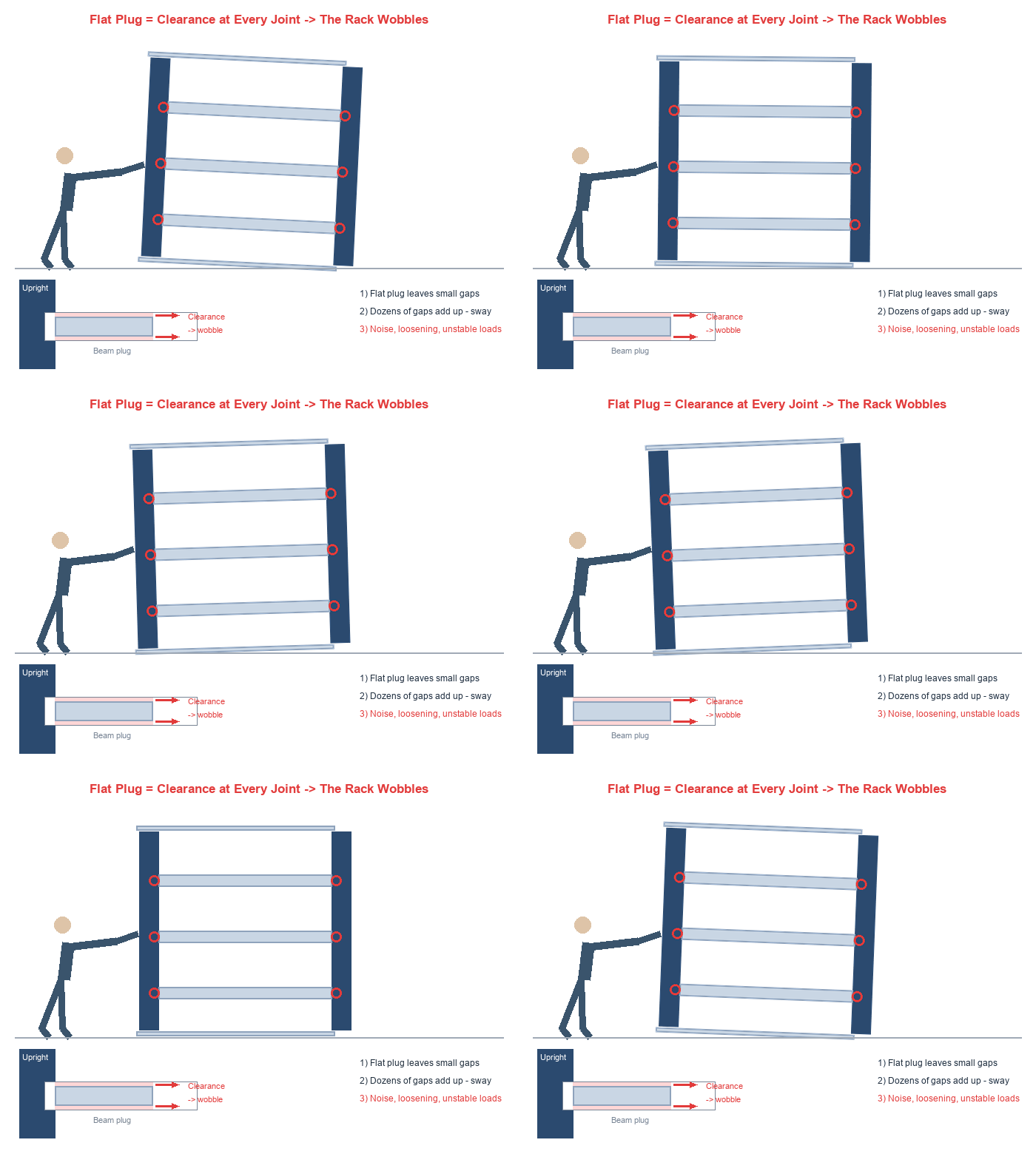
1. Why Plug-in Shelving Wobbles: The Built-in Clearance of Flat Plugs
Boltless shelving connects by pushing the plug on each beam end into a slot on the upright. Simple and tool-free — but the design has a hidden weakness:
- Flat plugs. A traditional plug is flat, so it relies on “close enough” dimensions to stay put.
- Manufacturing tolerance. Stamp spring-back and sheet-thickness variation mean every slot and every plug carries a fraction of a millimeter of deviation.
- Clearance that compounds. One loose joint is barely noticeable — but a rack has dozens of joints. Add the gaps together and the whole structure loses rigidity. That’s the sway you feel.
Why wobble matters (not just cosmetics):
- Segurança — shifting or toppling loads, especially at height.
- Long-term loosening — micro-movement at every joint wears pins and clips; the rack gets looser, not tighter.
- Noise — constant rattling in aisles and backrooms.
- Load distribution — sway concentrates stress on a few joints instead of spreading it evenly.
2. Why Traditional Fixes Don’t Stick
Over the years, manufacturers have “fixed” wobble after the fact:
| Traditional fix | The problem with it |
|---|---|
| Hammering joints into place | Depends on installer skill; inconsistent; damages coating |
| Shims / rubber pads | Labor-intensive, one joint at a time — and they loosen again |
| Extra lock clips | More parts, more assembly steps, harder to reconfigure |
| Manually bending tie-bar tabs | Slow to install, awkward to disassemble |
These are all patches for the symptom. They don’t remove the gap — so the rack stops wobbling on day one and starts again after a few weeks of use.
3. The Patented Answer: A Plug That Wedges Itself Tight
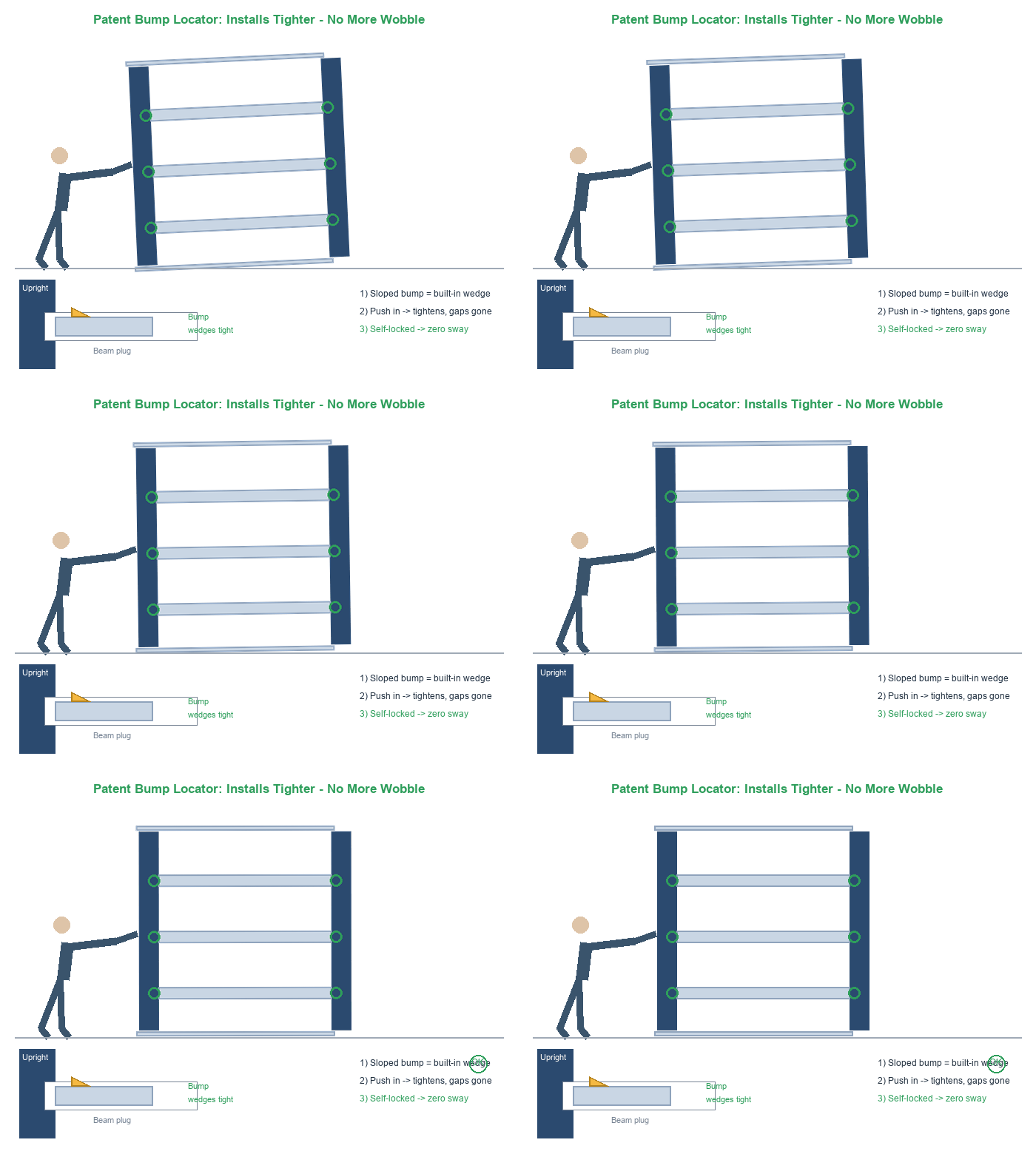
Nosso Bump Locator patent changes the joint itself:
- Estrutura: a small raised bump with a slope on the plug face of the beam connector.
- How it works: as the plug slides into the upright slot, the sloped bump creates a wedge / interference fit — the deeper you push, the tighter it locks. By the time the beam is seated, the bump has absorbed the tolerance gap and locked the joint in both directions.
- Resultado: with every joint on the rack wedged tight, the structure becomes rigid — the sway is gone.
Think of it as a built-in wedge: it gets tighter the more it’s used, not looser.
Companion feature: self-locking tie bars (barb design). On typical plug-in racks, the back tie bar has to be manually bent to lock — a slow step that also makes disassembly a hassle. Our tie-bar plug uses a barb-style self-lock: it clicks into place as you install it. No bending step, faster assembly, easy to take apart again.
4. What the Design Means for You
| Dimension | Traditional flat plug | Bump Locator patent |
|---|---|---|
| Sway after assembly | Yes — gaps compound | No — wedge absorbs clearance |
| Instalação | Needs hammering / extra clips | Push in — self-locks |
| Consistency | Depends on installer skill | Guaranteed by the structure |
| Over time | Micro-movement → looser | Stays wedged and tight |
| Reconfiguration | Often needs re-fitting | Still tool-free and easy |
| Tie bars | Manual bending step | Barb self-lock — no bending |
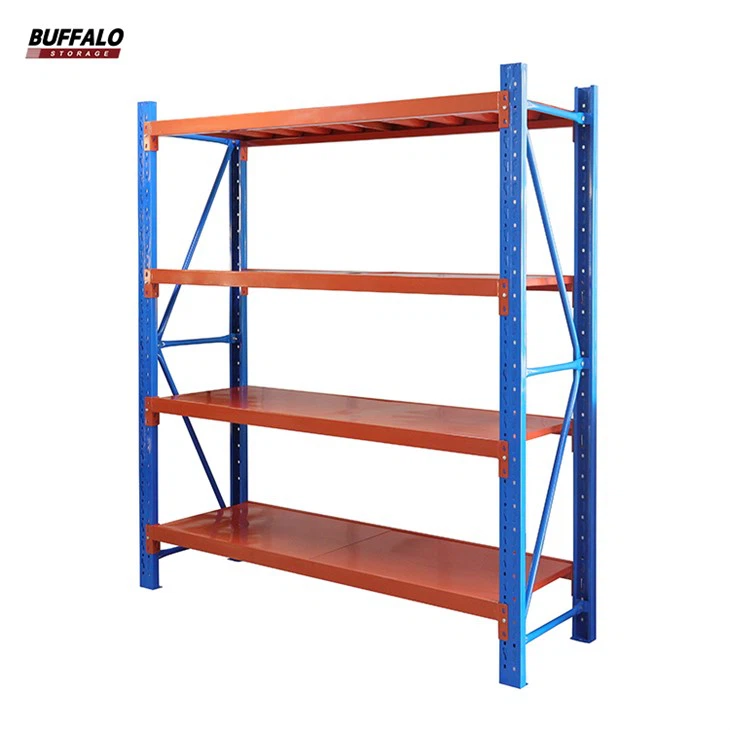
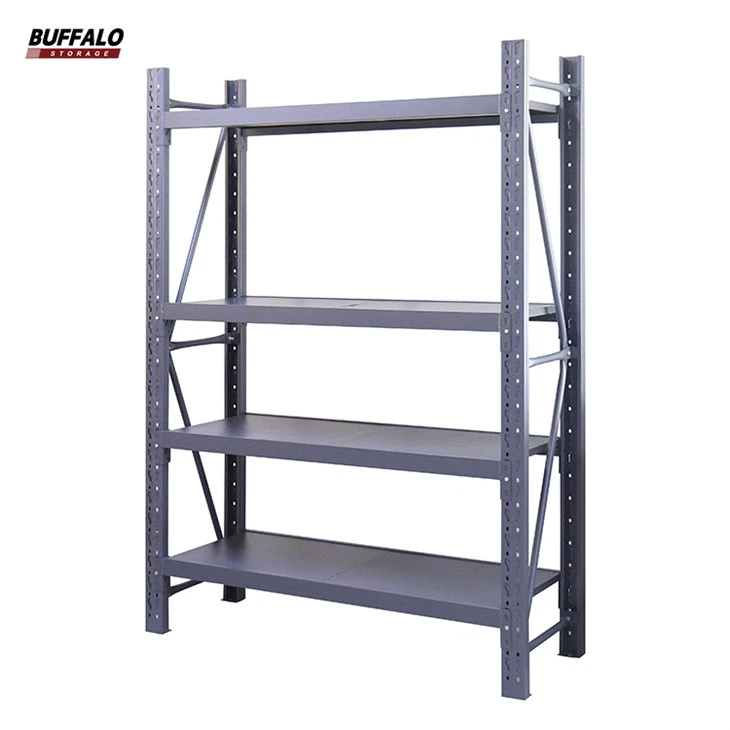
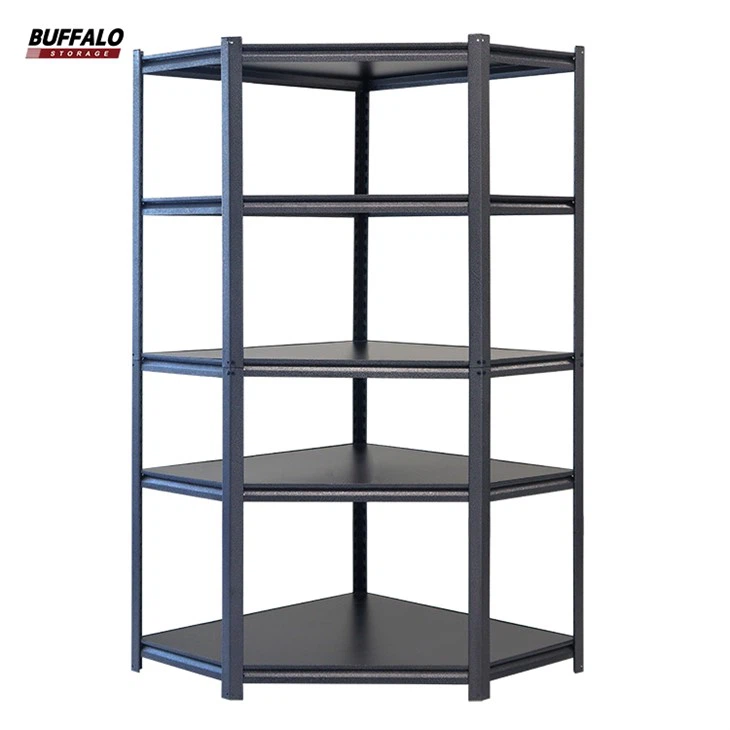
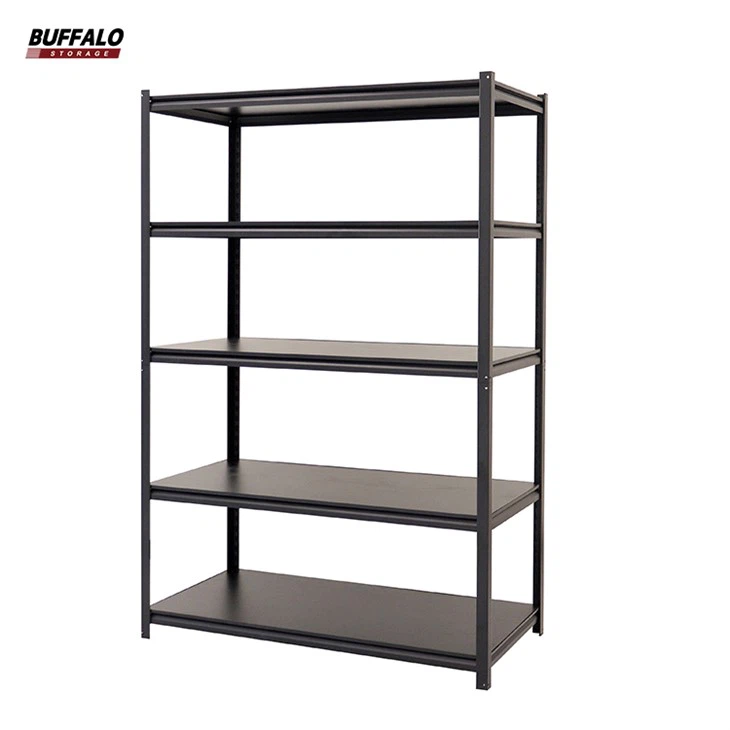
Where it applies: the whole boltless shelving range — warehouse and backroom storage, retail display shelving, garage and utility racks, e-commerce fulfillment.
The key point: the improvement is in the joint, so you keep everything you like about boltless shelving — no welding, no tools, quick assembly — and gain rigidity that feels welded.
5. About the Patent
- Patent name: Plug-in Bump Locator (design patent) — [Patent No. — insert]
- Related design: a Step Locator variant with the same wedging principle and a different geometry, available for specific product lines.
- Certificates, comparison samples and OEM options available on request — talk to our sales team (contact page).